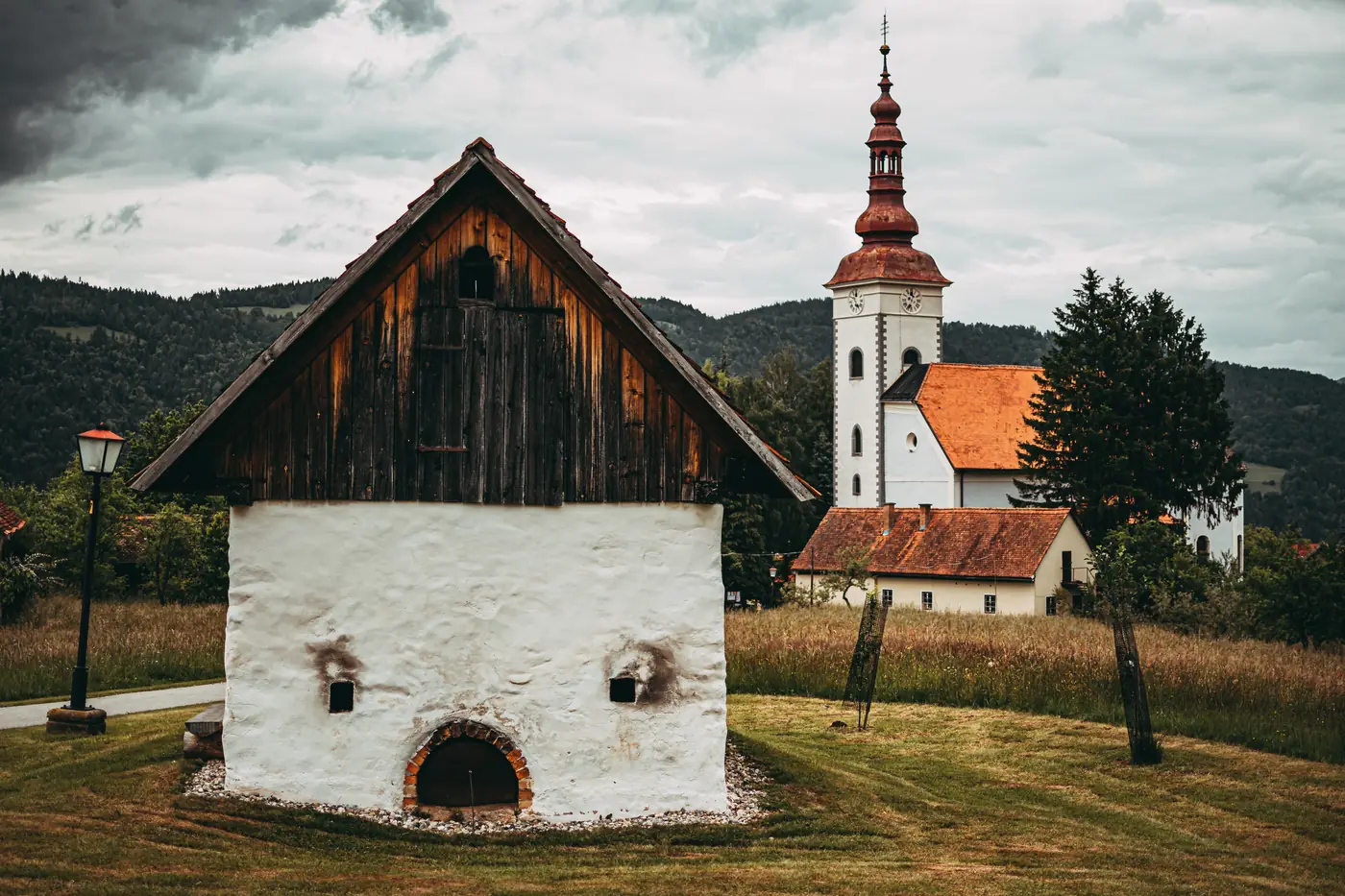
Lovrenc has always been rich in fruit, especially apples, pears and plums. Some of the apples were pressed to make cider, which we call mošt. The rest of the fruit was dried in the fruit-drying house, the Pajštva.
Pájštva is a dialect term for a simple building used for drying flax and fruit.
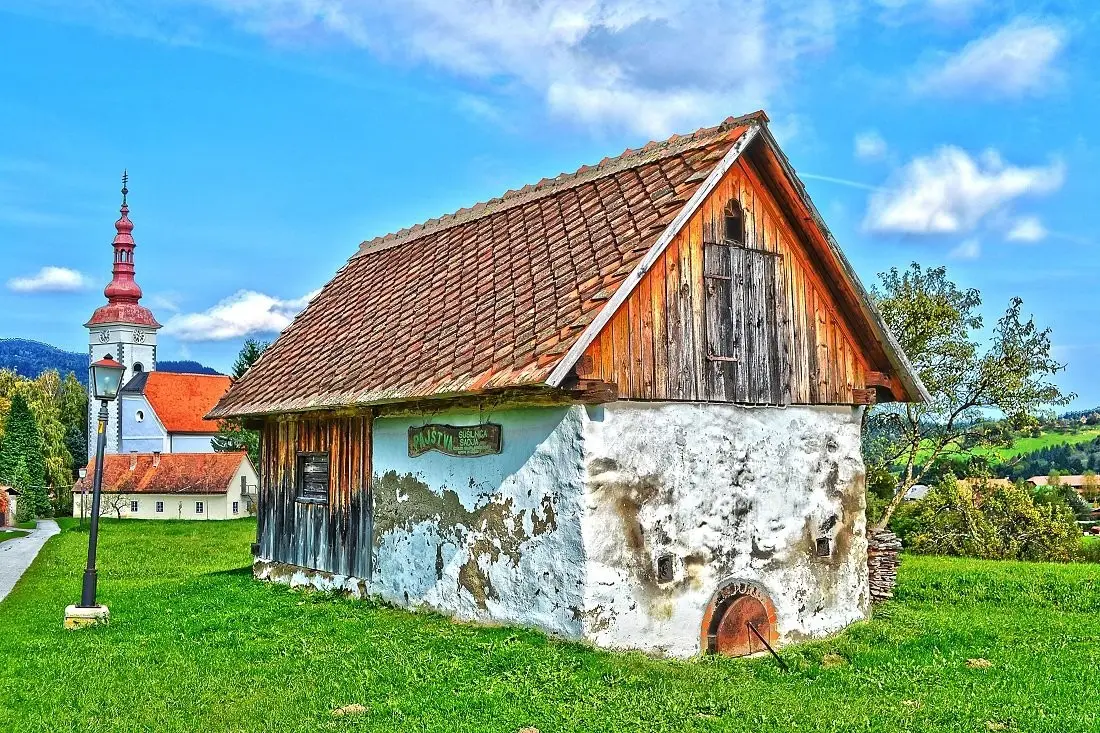
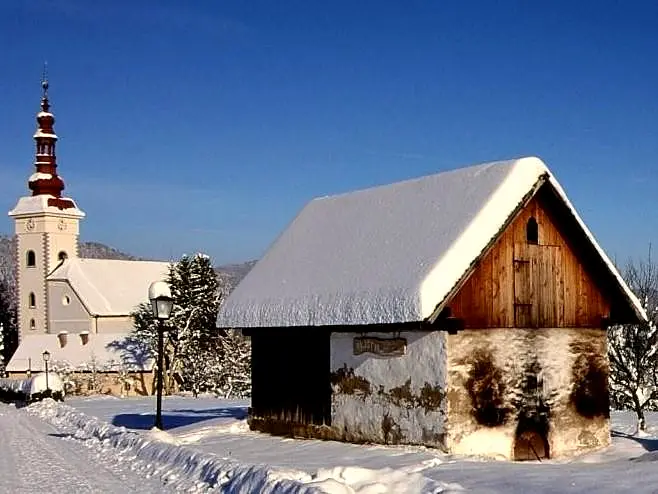
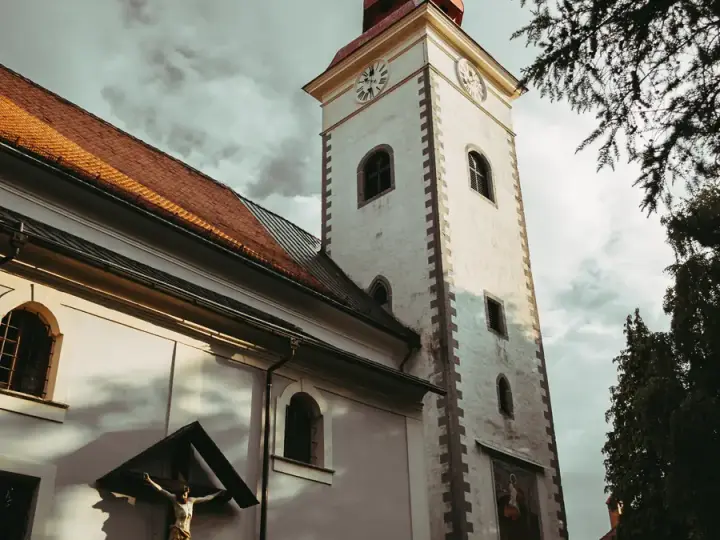
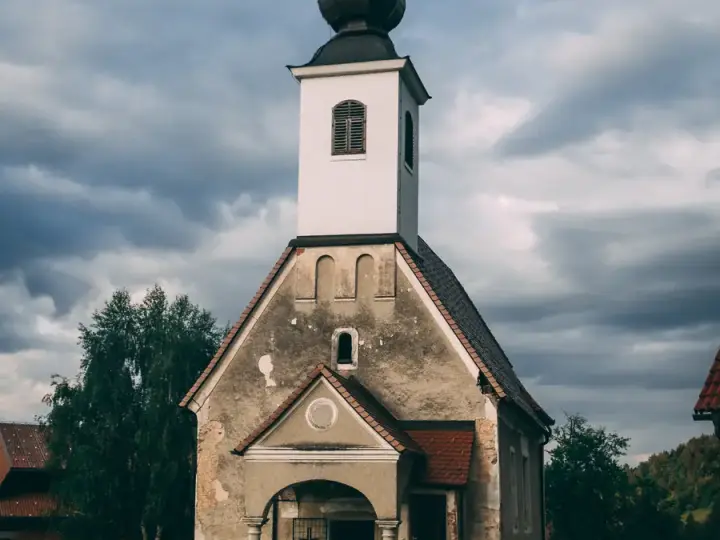
Fruit-drying houses – pajštve – were common on farms. Near the Parish Church of St Lawrence there still stands a pajštva that belonged to the parish. The parish dried its own fruit in it, and it was also used by local people.
According to local residents, the Pajštva is more than 200 years old.
Dried fruit was eaten as a snack. People often cooked it into a compote, which contained enough natural sugar, and ate it with bread for supper. Dried fruit was also cooked in thin maize porridge, a dish known as “turška župa”. Most popular of all, however, was dried fruit baked into fruit bread – “klecnprot”.
The Pajštva was used until the early 1950s.
It was restored some years ago, and fruit is once again being dried in it.
The Pajštva is an ethnological monument.
What makes the Pajštva special
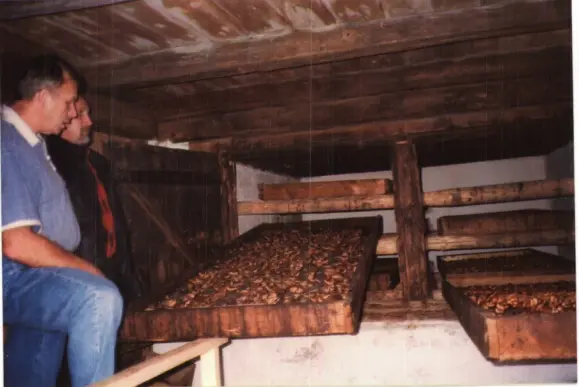
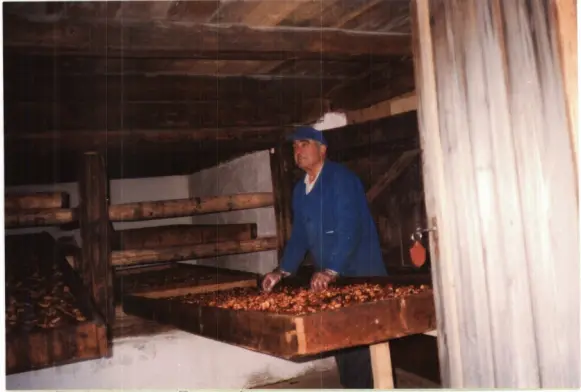
What makes the pajštva special is that the fruit was dried inside on racks (“dere”), while the fire was stoked from outside. The racks rest on wooden rollers (“valcni”), so they can easily be moved and set at the desired height or closer to the heat source, allowing the fruit to dry evenly. The fruit for drying was cleaned and prepared at home. Pears and plums were dried whole, while apples were cut into quarters; once dried, these were called “platiči”, and dried pears “kloce”. Anyone wishing to dry fruit had to bring their own firewood. The drying was looked after by a farmhand from the parish house. A slow fire burned day and night. The fruit usually took two to three days to dry, and in the meantime it had to be turned and sorted.
Architecture of the Pajštva
The building is 727 cm long and 337 cm wide. It is partly masonry and partly timber, and the roof is covered with old tiles. The roof truss is assembled and joined without nails, using only wooden pegs, or “cveki”. The interior is divided into two parts: an entrance area and the drying room. The drying room is built of masonry above a vaulted firebox and is divided into a left and a right section, each with three “dere” at three different heights. The dere are platforms nailed together from wood, on which the fruit was laid.
Virtual tour: 360° walk